$100K in Savings Without Losing a Single Capability

Company: Okta | Timeline: FY23–FY25 | Scope: Research tooling ecosystem (Dovetail, Great Question, UserTesting)
Vendor management · Budget optimization · Strategic partnerships · Procurement navigation
Two researchers can share a spreadsheet. Ten need a system.
When our research team started, it was two people. The tools we used reflected that reality—scrappy, functional, acquired one at a time as new needs emerged. Recruitment lived in one platform, the repository in another, unmoderated testing in a third. For a small team, it worked.
By the time I moved into a dedicated research operations role, the team had grown to more than ten researchers. What had been a manageable patchwork was now a fragmented ecosystem. Researchers were context-switching across platforms, data was siloed, and onboarding new team members meant training them on half a dozen tools. We'd outgrown our piecemeal approach to tooling—and scaling the team meant scaling the infrastructure underneath it.
I treated vendors as partners, not invoices.
The answer wasn't to rip everything out and start over—it was to rethink which tools earned their place in a growing team's workflow, and to build the vendor relationships that would make consolidation possible. I participated in vendor webinars, provided product testimonials, gave roadmap feedback, and invested in genuine partnerships with account teams. That groundwork created leverage that pure negotiation never could.
For Great Question, the value case was consolidation: by bringing recruitment, scheduling, session management, and incentive distribution into a single platform, we could replace six separate tools and the workflow friction that came with them. For Dovetail, it was about stability and partnership: I secured a 2-year renewal that locked in favorable pricing, but more importantly, I pushed for and received commitments on features our organization needed to scale—while raising Okta's profile as a leader in research operations within Dovetail's customer community. Each conversation was backed by usage data, competitive analysis, and a clear articulation of business value.
"Jared is instrumental in upping our tooling and research team with best practices. He is thinking about scale and how we can further our teams' maturity." — Manager review
I saw recruitment potential where others saw a conference booth.
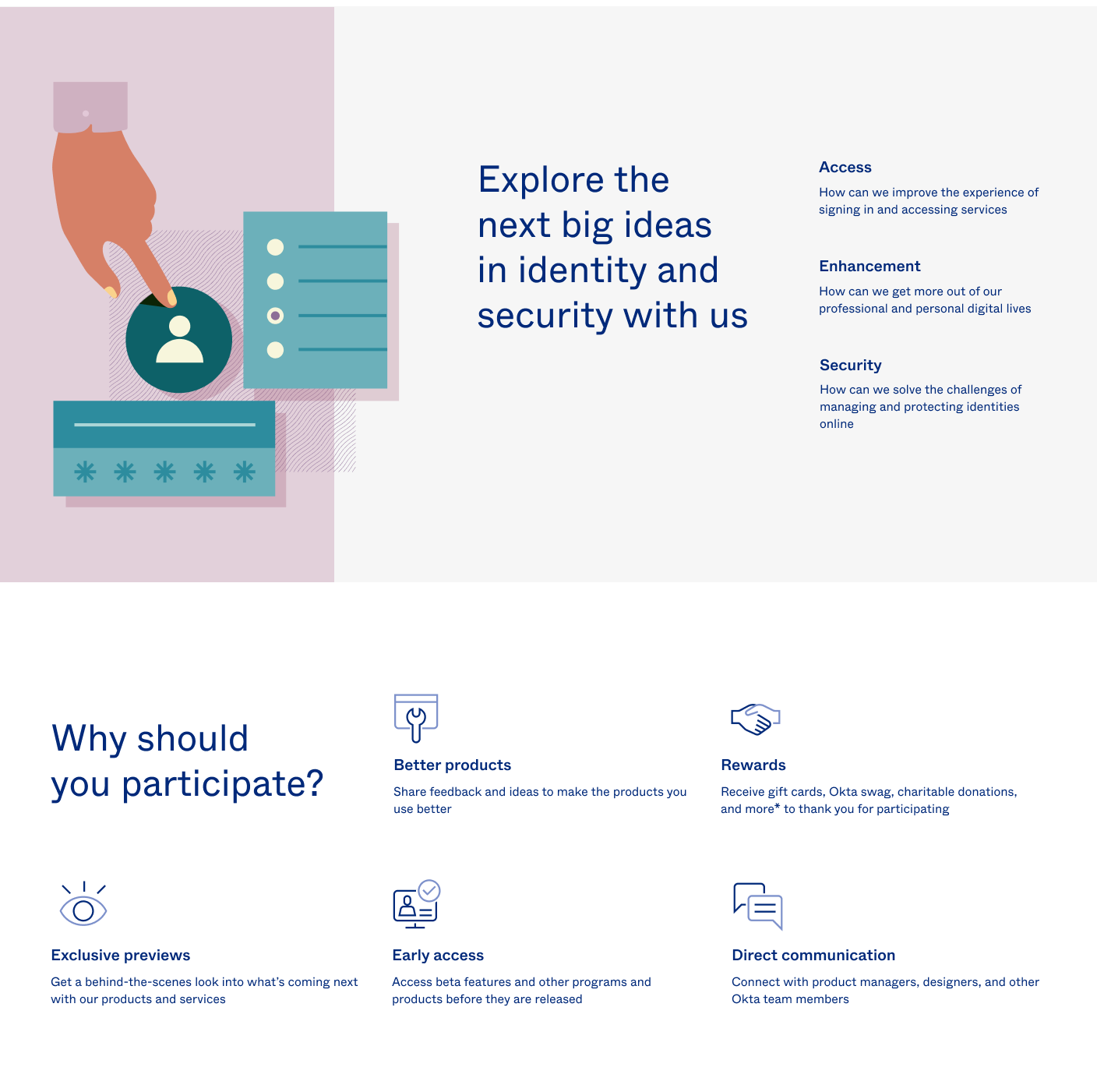
At Oktane (Okta's annual customer conference), I saw an opportunity to recruit research participants at scale—engaged customers who were already invested in the product, not panel recruits motivated solely by incentive. I updated our pipelines, set up a booth activation, and tripled signups year-over-year:
- FY23: $17K in recruitment cost savings
- FY24: $60K in recruitment cost savings
- Improved participant quality—engaged customers vs. incentive-driven panelists
The customer panel grew to 1,000+ members, becoming a sustainable pipeline for the entire research team, and set the stage for future self-service initiatives for the broader product team.
"Thank you for the hard work getting our customer panel set up. I was able to schedule customer calls for the next phase of Design Guardrails within a few hours!" — Peer feedback
Research ops isn't a cost center. The numbers prove it.
Total documented savings exceeded $100K across vendor renegotiations, tool consolidation, and recruitment optimization. But the financial impact tells only part of the story.
The real shift was in perception. Finance now saw research operations as a strategic function that thinks about ROI—not just a team requesting more tools. Procurement conversations moved from adversarial to collaborative. And researchers got a streamlined tooling stack that let them focus on research instead of platform management.
"He makes our team more efficient, effective, and productive. Through the recruitments at Oktane, the creation of the security panel in GreatQuestion, the investment in making sure that we can recruit the security persona without the risks of offering incentives... Jared has single-handedly enabled me to do my job with my most relevant persona!" — Peer feedback
The big takeaway: treat vendor relationships as long-term partnerships. Use data to drive decisions. Optimize for both service quality and cost efficiency. Most teams pick one—the leverage is when you deliver both.